


It is the middle of September. The temperature is a sweltering 92 degrees. The grass on the neighborhood lawns is a yellowish-brown and feels like hay. It has not been green for several months; it has not rained for months, either. Seemingly a single spark would ignite this dormant patch into a fiery blaze.
This is the reality for much of California year after year. Wet winters bring with them flooding and mudslides, but by late summer, the reservoirs have emptied and the soil is dry again. California is classified under the Mediterranean climate, meaning its warm summers and autumns are not abnormal, but climate change is rapidly exacerbating both extremes of this wet-dry cycle. This intensification has led to longer, hotter dry periods and more devastating bursts of precipitation.
California experienced a constant state of drought from 2012 to 2016. This half-decade drought incited significant damage to the state’s environment and population, causing issues in the agricultural sector as well as within residential flora upkeep that persists today. Eventually, the Californian drought subsided, and by the middle of 2017, over 75% of the state returned to typical drought-free conditions. Yet, again, by the end of 2018, the percentage of California affected by drought shot back up to over 90%, completely erasing the gains achieved in the prior year. These drastic and quick-changing conditions reveal the volatility of drought conditions throughout California; no plausible amount of rain can permanently mitigate the risk of drought.
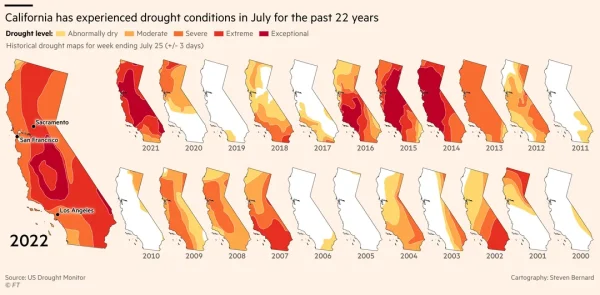
Droughts in California cause an array of issues: drinking water issues in rural areas, loss of agricultural jobs due to poor crop output and, most relevant recently, increased wildfire risk.
While severe wildfires are often incited by strong winds and warm, dry conditions, they also require a precedent of inadequate precipitation. This lack of rainfall leads to large amounts of flammable plant material being more prevalent, increasing the landscape’s tendency to sustain a fire.
For example, the devastating Palisades fire in January 2025 took place when the Westside was experiencing severe drought, as was the Altadena region during the Eaton fires.
The 2025 wildfires wreaked immense economic and ecological destruction on Los Angeles, costing approximately 53 billion dollars to the county and its residents and burning over 55,000 acres of land, much of which consisted of natural habitats for Los Angeles’s fauna.
Moreover, the toxic ash and fire retardants involved with the Palisades fire flowed into the Pacific coast, harming marine wildlife health, disrupting breeding processes, threatening food sources, and degrading ecosystems. The preceding drought ultimately set the environmental stage for these devastating events to occur.
In order to address these environmental concerns, the citizen population can take steps to reduce its water usage, preserving water for environmental, agricultural, and emergency purposes rather than less necessary ones.
Here are ten small actions to which you can commit to reduce your water consumption:
- Keep your showers short. Every minute by which you shorten your shower, you save 2.1 gallons of water – more than two days worth of drinking water.
- Take showers instead of baths. Baths take about 65 gallons of water, whereas your short seven minute shower will only use about 14 gallons.
- Put a filled jar in your toilet tank. This will reduce the amount of water used per flush. (Ensure that this action does not impact your toilet’s effectiveness.)
- Water your lawn in the early morning, between 5am and 10am, to maximize impact.
- Do not keep your faucet running when you brush your teeth.
- Plant native and drought-resistant plants in your garden.
- Fix all plumbing leaks in your house. While they may seem minor, leaks waste 1 trillion gallons of water every year nationwide.
- If you have one, consider using your dishwasher as opposed to handwashing dishes.
- Only wash your clothes when you have a full load of laundry.
- Consider buying clothes secondhand if that appeals to you. It takes an estimated 700 gallons of water to make one cotton t-shirt, enough water to keep you quenched for two years. Participate in next year’s Vintage Locker event, perhaps!
Freshwater is a limited resource, and we must do everything we can to preserve it in order to protect our local communities, economies, and ecosystems, especially in our increasingly deteriorating global climate.


