


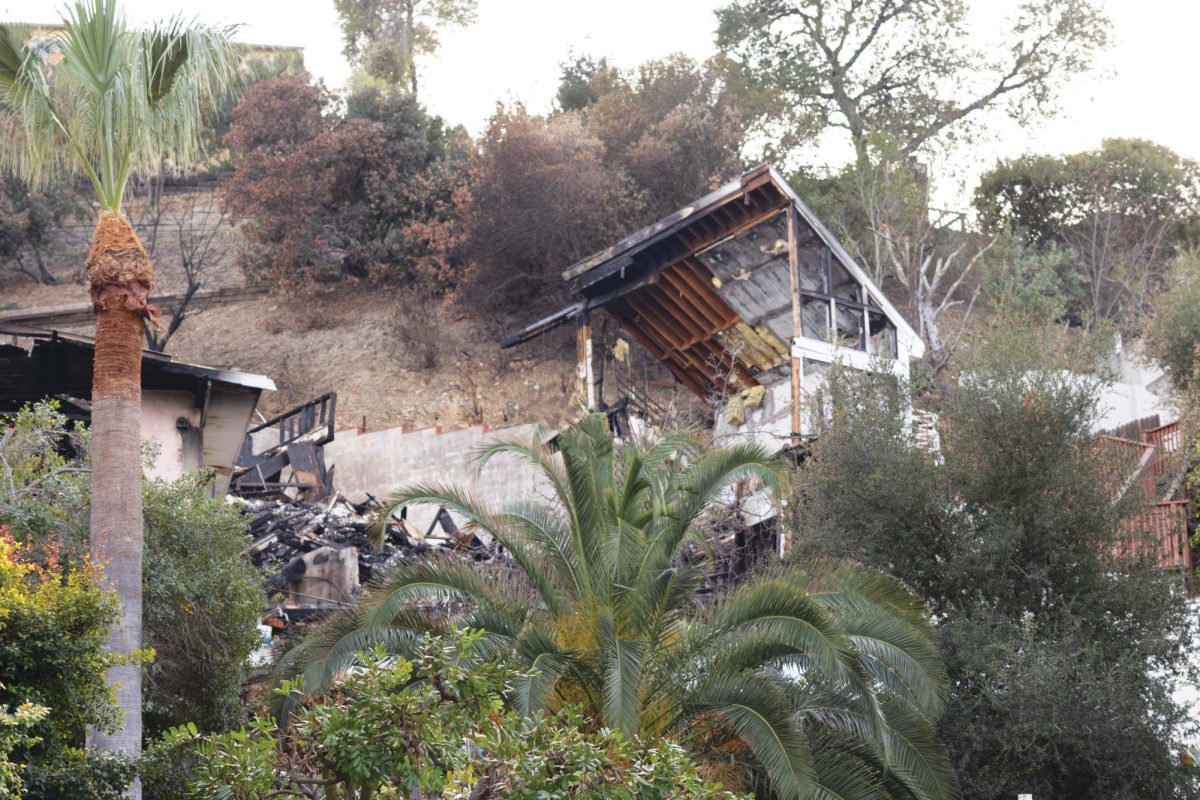




Since 2002, more than 30 mountain lions have been struck and killed on the freeway. With the evolving city of Los Angeles, apartment structures and buildings are constantly being constructed throughout all parts of the city, replacing the natural habitat for animals with a concrete jungle.
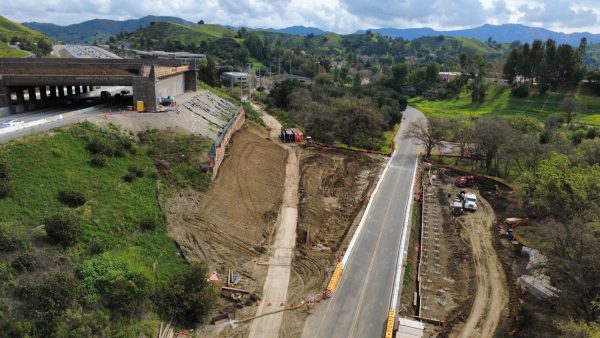
Stretching across 10 lanes of traffic in Agoura Hills, the Annenberg Wildlife Bridge is nearing completion, offering a safe passageway for animals navigating both sides of the 101 Freeway.
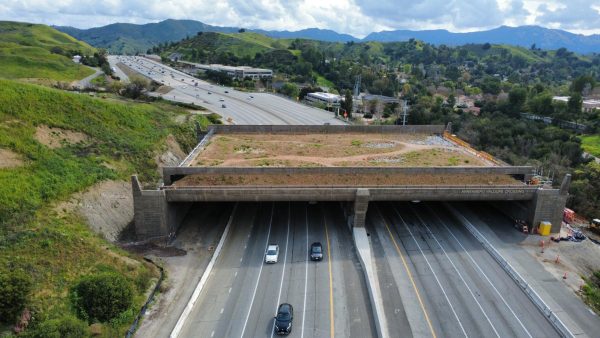
The Annenberg Wildlife Crossing is expected to open in the fall of 2026 to reconnect and expand animals’ natural habitat that they have lost due to the construction of our freeways. The Annenberg Wildlife Crossing will not be one of the largest animal crossings in the United States but one of the largest in the world. Over 300,000 cars commute under the bridge each day, so this animal crossing is sure to have a tangible impact for animal safety on a daily basis.
Jemma Jaffe ’28 said the project highlights the presence of wildlife in urban areas and the need for safety measures.
“I don’t personally know anyone who commutes by the bridge daily, but I’ve heard that people who drive in that area think it’s a good idea because it can make roads safer and protect animals,” Jaffe said. “The bridge makes me realize that there’s more wildlife around us than we usually notice. It shows that animals are constantly trying to move through areas that humans have built over, and they need safe ways to do that.”
One of the main reasons for the construction of the Annenberg Wildlife Bridge is to specifically protect mountain lions. P-22, a mountain lion who resided in Griffith Park on the eastern side of the Santa Monica Mountains, was the first tagged mountain lion in 2012. P-22 was the subject for much of the media surrounding mountain lions in Los Angeles, specifically noticed for safely crossing both the 405 and 101 freeway.
Unfortunately, in December of 2022, the mountain lion was hit by a vehicle in the Hollywood Hills area and later euthanized due to its severe injuries. After this story, Beth Pratt, the director of the National Wildlife Federation, started the construction of Los Angeles’ first wildlife bridge to protect animals like P-22 from vehicle collisions.
“I grieve over each mountain lion lost on our roadways,” Pratt said. “Yet wildlife crossings are not just about single tragic losses of beloved animals. Our wild heritage, from mountain lions to monarch butterflies, is something Californians value and treasure. Ensuring that wildlife remain on our landscapes into the future across the Golden State requires that we address the devastation that freeways and roadways have caused to ecosystems, fragmenting them into islands that threaten wildlife large and small with extinction.”
The school’s emphasis on environmental awareness through its science curriculum and student-led environmental clubs aligns with the same principles as the Annenberg Wildlife bridge. For the school’s community, the bridge stands as both a practical and symbolic lesson that Los Angeles’ natural environment is not separate from but actively involved with our daily lives.
Honors Evolution and Ecology teacher Ryan Ellingson said infrastructure projects like the wildlife bridge can contribute to long-term environmental sustainability.
“The wildlife bridge is a small sacrifice that makes a large impact to our biodiversity in our environment,” said Ellingson. “The school’s impact on the environment, such as our production of emissions, is also a small sacrifice that we can limit to help contribute to the cause, just like the bridge providing a passage for animals to continue to grow and strive in the ecosystem.”
Harvard-Westlake’s River Park is a good example of this, with local California plants and trees being used to design the new sports complex along with rain water to water grass and plants.
Furthermore, the Annenberg Wildlife Bridge is not only for mountain lions.
“Although the Wallis Annenberg Wildlife Crossing will help save this local population of mountain lions, it is also reconnecting a regional ecosystem for all wildlife, large and small,” Pratt said in a statement from the Wallis Annenberg Foundation. “The same genetic isolation that the mountain lions have experienced has also been found in research by the National Park Service on other creatures such as coyotes, bobcats, birds and lizards.”
When the Annenberg Wildlife Bridge opens this fall, animals will finally be able to move safely through a space that once divided them. As Los Angeles grows, it will hopefully be a place where wildlife can survive with the help of humans. It will require continued commitment from communities such as Harvard-Westlake and beyond with optimistic and proactive outlooks regarding our environmental future. The bridge marks the beginning of the small, meaningful sacrifices that define how we care for the world around us.