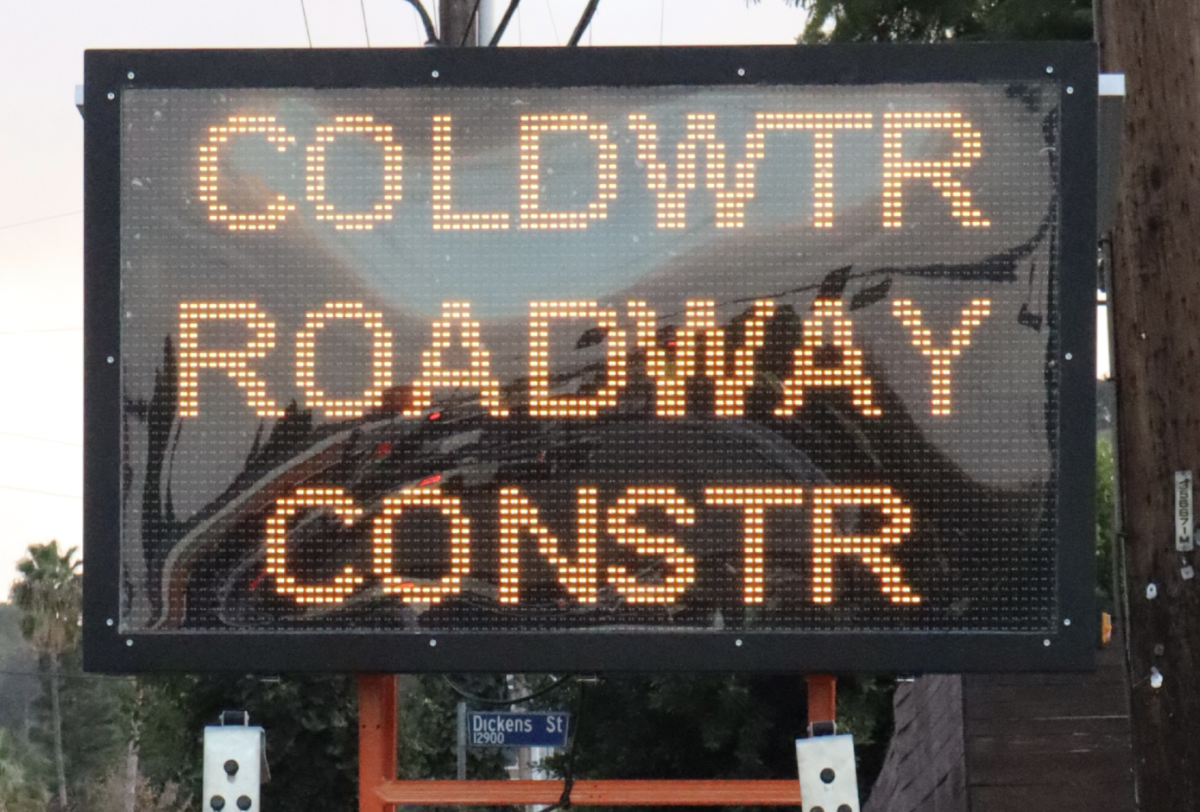


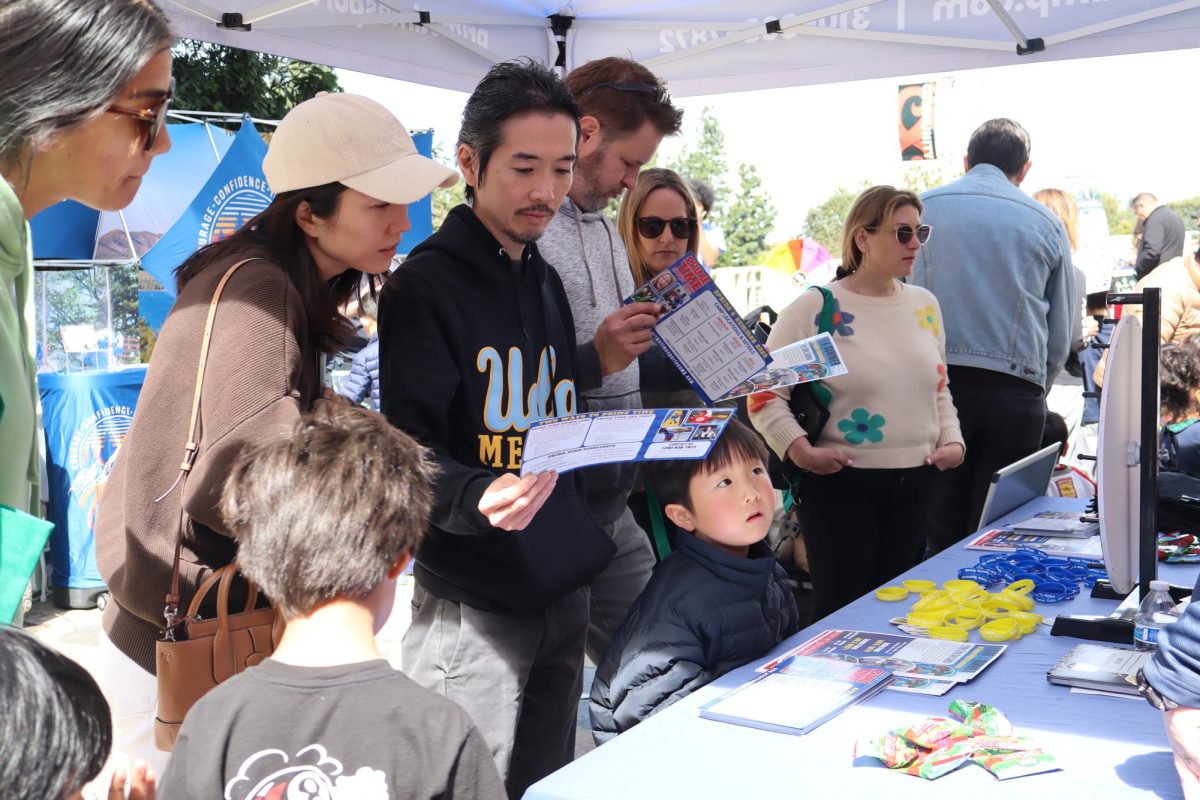
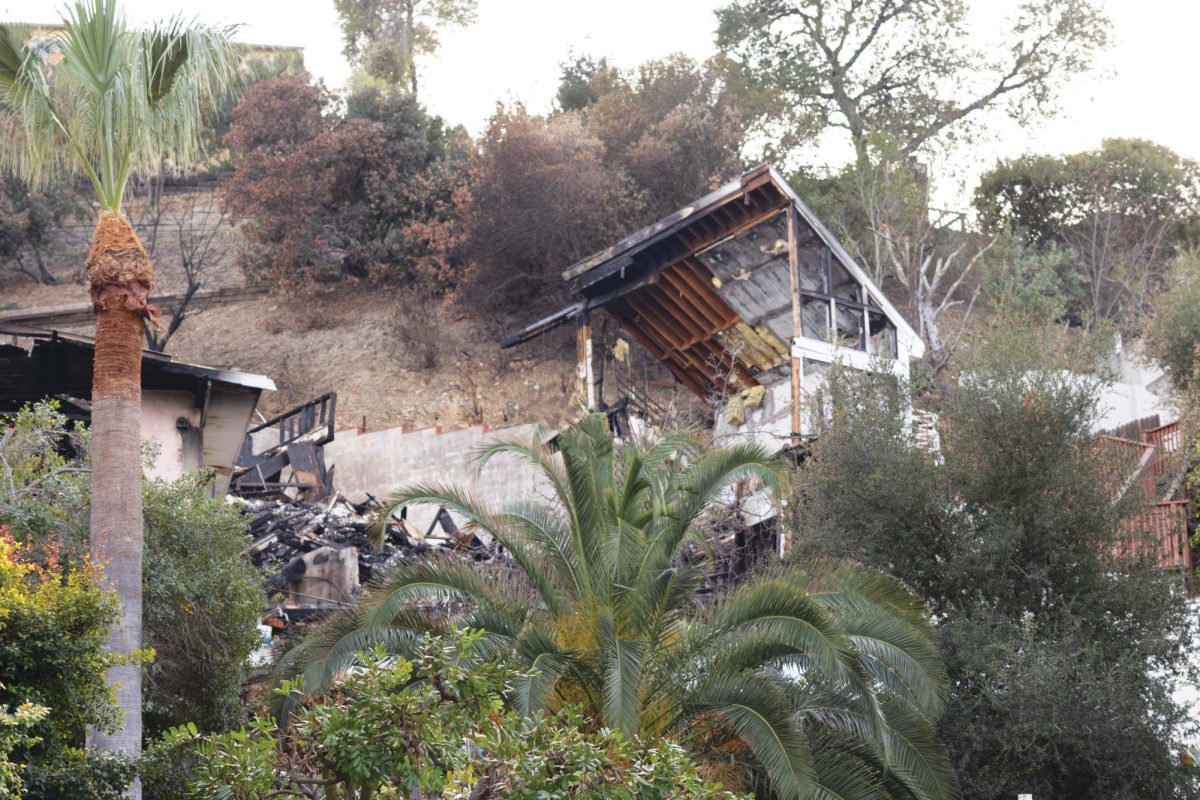



Members of the Palisades community gathered at the American Legion Veterans Post to commemorate the one-year anniversary of the Palisades Fires on Jan. 7 and remember the 12 people who passed away.
Calia Trachtenberg ’27 said although she did not attend the protest, she understands the message it aimed to promote.
“I decided not to attend due to the timing, as I was still in school when the main protest was happening,” Trachtenberg said. “The main message during the protests was ‘They let us burn.’”
Trachtenberg said there is growing dissatisfaction toward those in authority.
“People, especially in the Palisades, feel leadership didn’t help enough during the fires, and due to a lack of funding, things were made worse,” Trachtenberg said. “People are upset at how slowly the rebuilding is going along with the fact that our elected officials didn’t help as much as they could.”
Hal Craig ’27 said he chose not to take part due to a lack of information about the demonstration.
“I wasn’t sure who the protest was directed at or what specific change people were hoping for,” Craig said. “That uncertainty made me hesitant to participate. There are class action lawsuits happening, and my family is involved in some of them. To me, that feels like a more concrete way to push for accountability.”
Malena Atluri ’27 said she was not prepared for the fires or the grief that followed.
“The fires were so out of the blue, and honestly, a crazy experience,” Atluri said. “No one was prepared for how fast everything changed. People’s houses were burning down, and that left a lot of emotions behind. It wasn’t just physical damage. It affected people deeply. Even people who didn’t lose their homes still felt affected. Everyone knew someone who had been impacted.”
Atluri said she thinks people protested to make their concerns heard.
“The protests were a way for people to cope with everything that happened,” Atluri said. “It gave people something to do with all those emotions. The protest was also about visibility and making voices heard. People wanted to feel like they were part of something bigger than themselves when everything else felt helpless.”
Craig said he did not participate because he did not think it was the best way to enact change.
“Sometimes protests work, and sometimes they don’t,” Craig said. “A public rally is not always the most effective way to create change. For me personally, my time felt better spent actually finding out what happened. I wanted answers instead of just expressing anger.”
Craig said he hopes to design a project about his findings on what happened during the fire.
“I want to ask high-ranking officials why the LAFD was so unprepared and why the water supply was so unprepared, ” Craig said. “I’m going to publish everything I find in the form of a podcast so people can know what I know. Education about how this was allowed to happen is what really matters.”
Trachtenberg said she does not think leadership did all they could to help during the fires.
“People feel that our elected officials didn’t help as much as they could during the fires,” Trachtenberg said. “Because of that, many people feel abandoned by the leaders they trusted. People want to be heard more than anything. Our homes were destroyed, and our lives were put on hold, and that shouldn’t happen again.”
Craig said he thinks that modifications have to be made after the fire.
“With climate change, this type of fire can and will happen again if nothing changes,” Craig said. “That’s why I think this should be treated as a serious wake-up call.”