





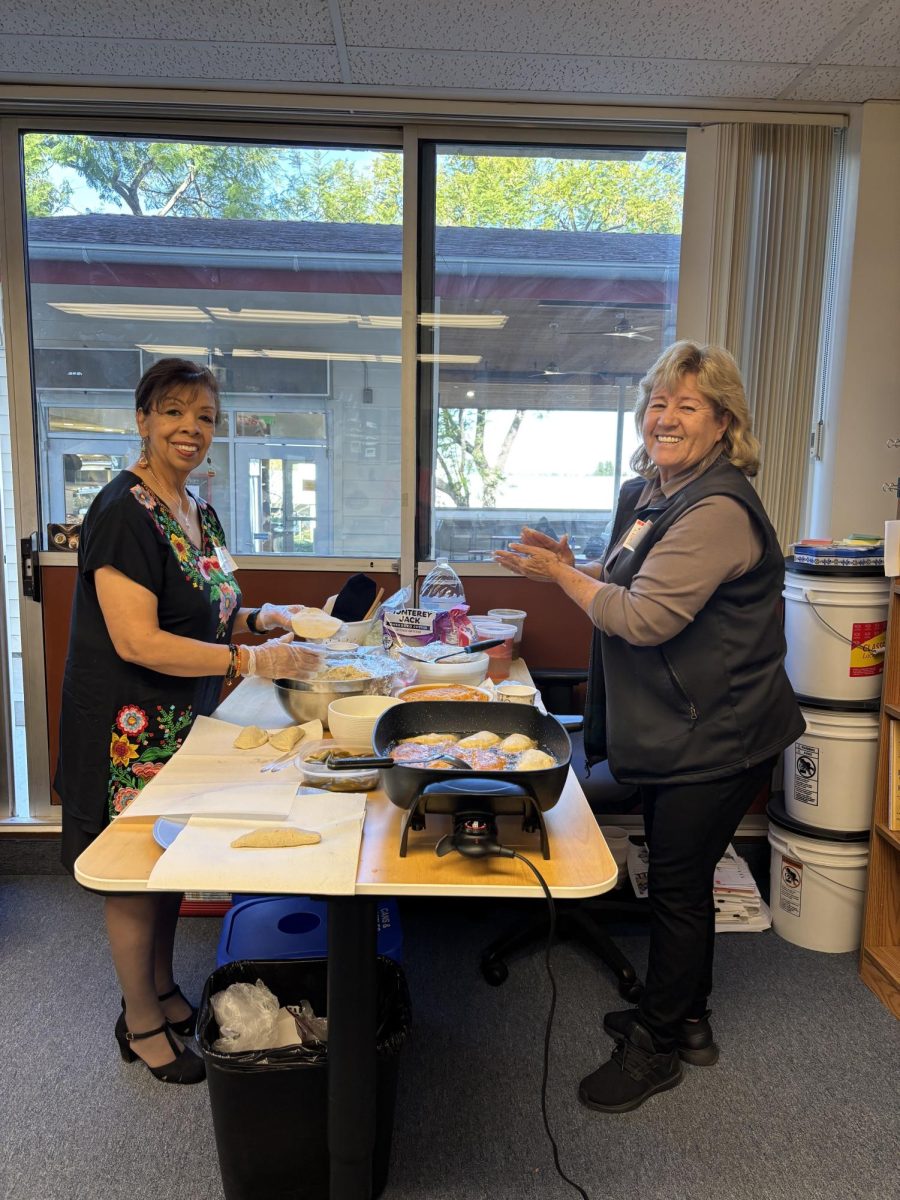
The Spanish V class hosted speakers to accompany their unit about art and identity on Jan. 22 and Jan. 24. Former Symphony Director Mark Hilt, who retired last year, presented a musical arrangement on the first day, and Consuelo Pérez, a Mexican immigrant and cook, spoke about traditional Mexican foods during the second presentation.
Spanish Teacher Margot Riemer said the presentations increased the authenticity of the topics she covered in class.
“It’s one thing for me, a white American and not a native speaker of Spanish, to introduce students to these important cultural topics,” Riemer said. “They become more meaningful when someone else reinforces them.”
In his demonstration, Hilt shared a symphonic adaptation of the poem “Sensemayá”, arranged by composer Silvestre Revueltas. The Spanish V class previously read and analyzed the poem.
Gideon Marley ’25 said Hilt’s presentation demonstrated unique aspects of Afro-Cuban music.
“Hilt’s presentation showcased the niche Afro-Latino culture,” Marley said. “We learned about a song endemic to Cuba, specifically to the Afro-Cuban community. I had a good experience listening to the music and learning about how different the rhythms can be.”
On Jan. 24, Pérez shared her traditional quesadilla recipe and spoke about the quesadillas’ significance to her traditions.
Seth O’Brien ’25 said Pérez taught him about the history and traditions of quesadillas, elements of food that are often lost despite the cultural diversity in Los Angeles.
“Especially living in Los Angeles, we are exposed to the foods of many different cultures,” O’Brien said. “The cultural significance and traditions behind the foods aren’t always as popularized. I enjoyed learning about the traditions and origins of a food that I enjoy so much.”
O’Brien said the aspects of Latin American cultures and traditions brought to his Spanish V classroom made the class experience more meaningful.
“Food and art are some of the most crucial aspects of any culture, but they are often left out of lessons in the classroom,” O’Brien said. “Getting the exposure to Latin American art and food and learning the significance of the traditions behind them makes the course much more engaging and impactful.”