







During lunch, as chatter fills the hallways and lockers slam shut, President of the Muslim Student Association (MSA) Zidaan Sattar ’26 slips quietly into an empty classroom. He gently places his backpack on the classroom floor, unfurles his prayer mat and sits cross-legged facing Mecca. For a few short minutes, the hum of campus life fades, replaced by the soft rhythm of spiritual devotion. Inside Munger 202, Sattar takes a steady breath in, closes his eyes and feels the momentum of his day start to slow down. His shoulders soften, the tension in his jaw eases and a sense of clarity settles his scattered mind.
Sattar said that taking even a few minutes to pray between classes helps him stay calm amid the hectic school day.
“When I pause here, even for just five minutes in between classes, praying helps to keep me grounded,” Sattar said. “It’s a reminder to slow down when everything else feels busy.”
At school, religion shows up in small, everyday moments rather than formal ceremonies. Students bow their heads before a test, send a verse to a friend or take a quiet moment to pray during club meetings. Clubs and faith groups offer a space to pause and reflect for students, and to share experiences and connect with peers who understand their same struggles. Even brief moments about faith can bring comfort and clarity amid the rush of school life.
Sattar said religion is part of his routine and builds his discipline.
“Islam is mostly about daily prayers,” Sattar said. “Since I pray five times a day, I end up doing some at school and some at home. It keeps me humble.”
Sattar’s desire for clarity and connection reflects a broader shift in how Gen Z engages with faith. Rather than following traditions out of obligation, young people are choosing their beliefs more intentionally. 74% of Gen Z reported that they are spiritual but not necessarily religious, suggesting that institutional labels matter less than personal meaning, according to a 2023 Springtide Research Institute study. Nearly half of Gen Z says religion plays an important role in their sense of identity, even if they rarely attend services, according to The Wall Street Journal.
This increase in religious interest takes place alongside high emotional pressure. 67% of Gen Z report feeling overwhelmed about the future and many students describe religion as one of the few consistent rituals they control according to Global Coalition for Youth Mental Health. A 2022 study showed that nearly 60% of young Americans say they cope with stress through prayer or meditation, even if they don’t formally belong to a church, synagogue or mosque, according to American Psychological Association.
President of Christian Discussion Club Andrew Suh ’26 said his religious beliefs began with curiosity, but deepened because of personal struggles.
“I was fascinated by the idea of an afterlife when I was little,” Suh said. “However, as I got older and faced hardships with family, school and finances, I leaned more on my faith. It gave me someone above my problems that I could look to for wisdom, support and comfort.”
Just a few classrooms down from Sattar, in the Jewish Club, challah is sliced as students share reflections on the Torah. Across campus, each student turns to a different faith, yet all are searching for the same thing: a place to belong.
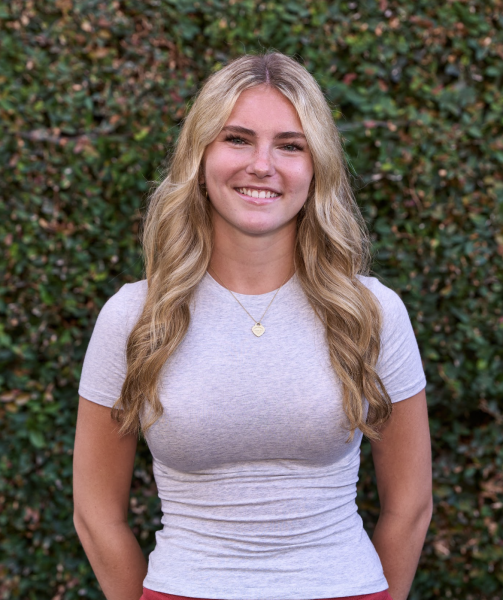
Co-Leader of the Jewish Club Sarah Anschell ’26, said being a part of the Jewish Club has allowed her to bring that same sense of community to campus.
“I wanted to help students celebrate Jewish culture and feel proud of their identities,” Anschell said. “Even if someone isn’t super religious, there’s a place for them in our club. We host events like challah-baking and Shabbat dinners that give people a space to slow down and connect, whether they come for faith, food or friendship.”
The need for a sense of community is a reality that stands in contrast to national data. While 29% of Americans now identify as religiously unaffiliated, according to Pew Research Center 2024, many of the schools’ students are quietly moving in the opposite direction. For some, faith is less about doctrine and more about anchoring in a world that feels increasingly unstable, according to The Bright World.
A survey found that the percentage of Jewish students who said their Jewish identity was very important increased significantly from 2022 to 2024, showing stronger identity orientation among Jewish students in recent years, according to Tufts University researchers.
Anschell said, for Jewish students, their religion is grounded in community and connection.
“Judaism is really about community and shared values,” Anschell said. “My Jewish identity gives me a sense of belonging by connecting me to long-standing traditions and history. It reminds me to carry those values of curiosity and compassion everywhere I go, even in spaces where not everyone shares my background.”
Suh said that his club, although still in its early stages, has already attracted unexpected voices.
“So far, we’ve been a space where Christians and, surprisingly, non-Christians come to discuss theology and the place of religion in politics, academia and social life,” Suh said. “I’ve noticed people are definitely more open now. They may not all believe, but they’re curious.”
The school’s religious clubs reflect this blend of structure and flexibility. For some students, religion isn’t confined to belief alone, but expands into spaces for open dialogue, curiosity and connection. Whether conversations turn to philosophy or friendships, these clubs show how spirituality on campus often brings people together.
Sattar said his affinity group isn’t just about preaching, but about presence.
“MSA is more social than anything,” Sattar said. “I mainly want to bring people together and clear up misconceptions about Islam. We bring people together through activities like Kahoots and discussions, which are meant to be a combination of learning and fun.”
Through the Jewish Club, Anschell said faith often serves as a bridge rather than a barrier.
“Even though Judaism isn’t the dominant culture here, I see it as an opportunity for connection,” Anschell said. “We’ve worked with other religious affinity groups, especially during the multicultural fair in the spring, which helps everyone learn about one another’s traditions and build genuine friendships. That kind of open dialogue makes the school feel more inclusive and close-knit.”
Though Jewish people make up only about 2.4% of the U.S. population, and students who identify as Jewish often represent a small minority on school campuses, many say their connection to faith has strengthened over time according to the Pew Research Center.
Anschell said that, as she’s gotten older, her connection to Judaism has only deepened.
“When I was younger, I took my faith for granted because I went to a Jewish day school and everyone around me shared [the religion] it,” Anschell said. “But, as I’ve grown up and met people from different backgrounds, I’ve realized how much my traditions mean to me. They’re a part of who I am, something I want to hold onto and share.”
Even those who don’t attend services say something is shifting in Gen Z’s views towards religion. For many students, faith is as much about community as it is about tradition.
Anschell said she hopes to create a space where everyone feels seen and celebrated.
“I initially wanted to be involved in the Jewish Club to help students celebrate Jewish culture, connect with one another and feel proud of their identities, regardless of whether they feel deeply connected to the religion or are just curious to learn more,” Anschell said. “It feels really meaningful to ensure that all of our members feel represented at school.”