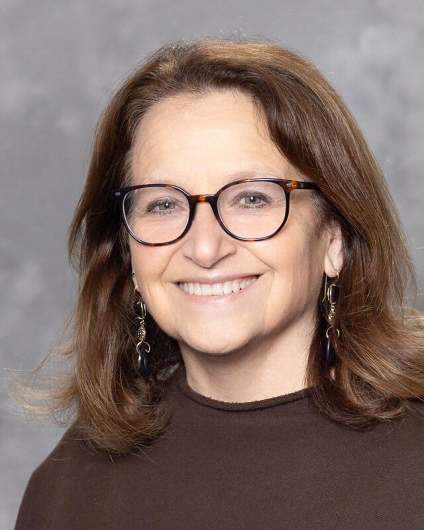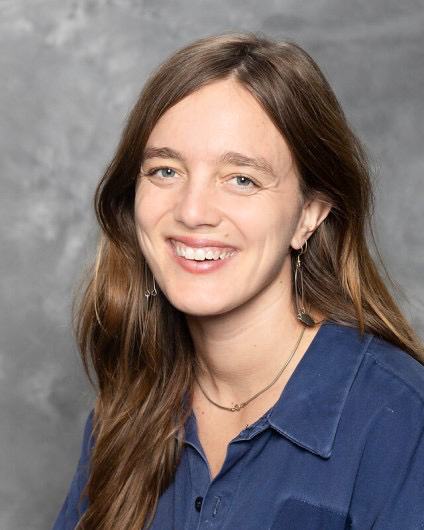






For her Senior Independent Study, Lauren Daub ’26 is working on a project to predict the outcomes of ceramic glazes by applying machine learning to the glaze process. Upper School Math and Computer Science teacher Andrew Theiss is advising Daub’s project.
Daub said her project involves both hands-on and computer-based components, and she is focusing on one aspect per quarter.
“My project is about trying to predict highly volatile cone 10 glazes post-firing from their base ingredients and chemical compositions,” Daub said. “The first part of the project that I’m working on during first quarter is making the test tiles to build the dataset. The second part involves data analysis. To do the actual predictions, I’m going to test the validity of different models, including linear regression, polynomial, random forest and DNNs.”
Daub said she wanted to merge her passion for ceramics and computer science through her project.
“I chose this project because I really like ceramics and computer science,” Daub said. “The Harvard-Westlake courses only go so far, so I thought this would be a fun opportunity to keep improving my machine learning skills applied in an area that I enjoy.”
Daub said machine learning can help identify relationships between ceramic glaze ingredients during firing that may be difficult for the human eye to identify.
“Ceramic glazes are formulated from ingredients, many of which are already reduced down to the chemicals they are composed of, such as cobalt carbonate,” Daub said. “For other ingredients that are basically rocks, large databases generally have their chemical compositions analyzed. But because these reactions at high temperatures are very complicated and hard to predict from a human perspective, using machine learning, you can better understand more hidden relationships that we may not see.”