

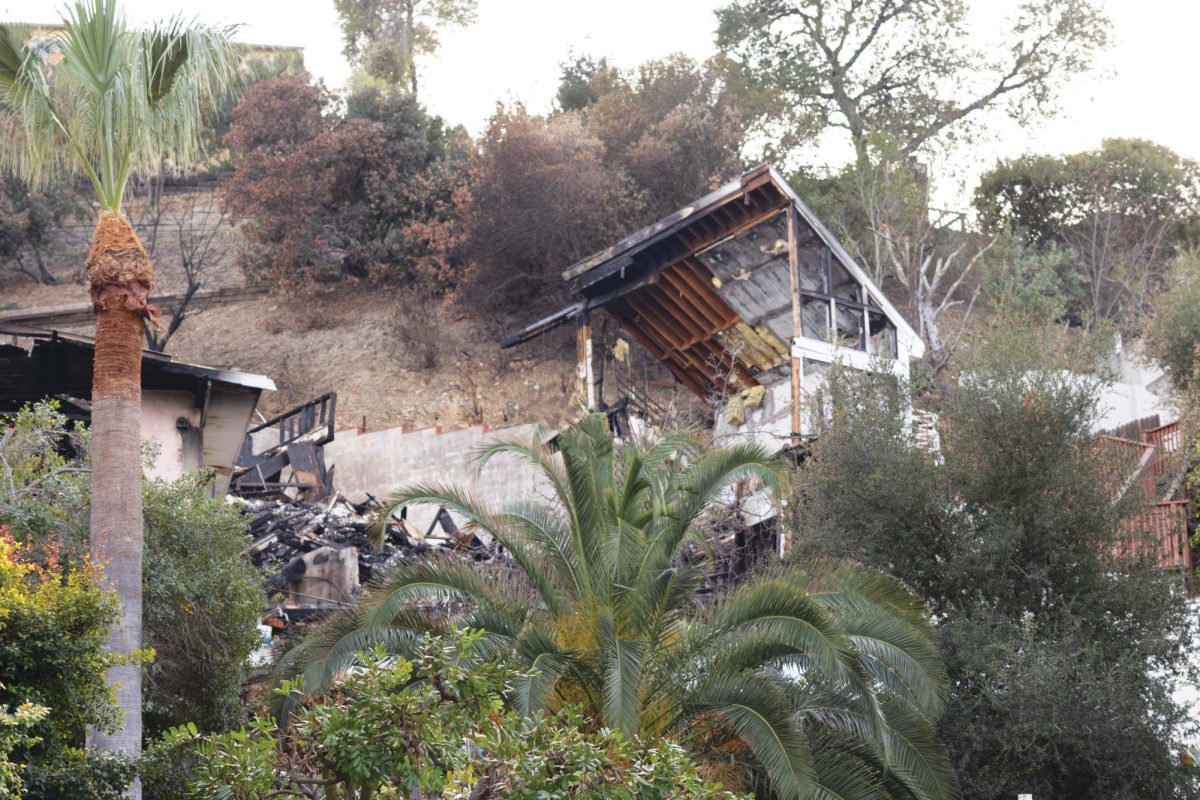



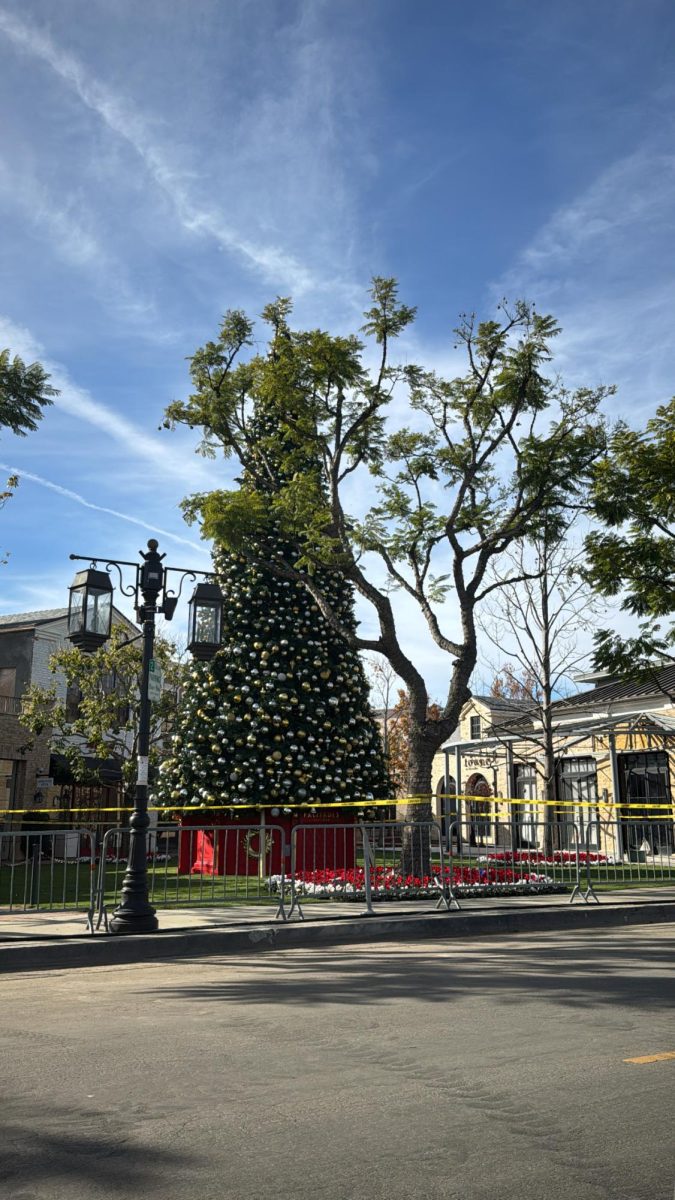
Jan. 7 marked the one-year anniversary of the Southern California wildfires, a disaster that destroyed or damaged more than 18,000 structures and displaced over 100,000 residents. Widely considered the second-most destructive wildfire event in California’s history, after the 2018 Camp Fire, the LA Fires deeply impacted the school community. More than 50school families and fourfaculty members lost their homes, and hundreds more were temporarily evacuated. A year later, the community continues to reflect on loss, resilience and the ways families and staff are rebuilding their lives together.
Barron Linnekens ’26 said the first day of the fires began like any other before a phone message turned everything upside down.
“It was just an ordinary school day at first,” Linnekens said. “Then, I got a text from my mom saying, ‘There’s a fire at home. You might not be able to come home tonight.’ They weren’t letting people come back, so I stayed with a close friend who lives near campus. After that, I spent a night at my aunt’s house and then at another friend’s house. I only had my car, my credit card and a small amount of clothes.”
For some, the key signs of danger arrived not through a message or alert, but what they could see outside their own windows. Science teacher Nate Cardin, who lost his Altadena home in the Eaton fire, said he evacuated despite never receiving an official warning. Cardin said he left because he saw the flames advancing and trusted his instincts.
“My husband and I were at home when our power had gone out,” Cardin said. “Then, just off in the near distance, we could see that the mountains were completely on fire. We made the executive decision at that point to evacuate. We lived in the part of Altadena west of a street called Lake, which is traditionally a redlined neighborhood. It’s historically a lower–income neighborhood, and not unrelatedly, anyone west of Lake never got an evacuation notice. So, we didn’t evacuate because we got a notice. We just evacuated because it felt like the smart thing to do.”
In the weeks and months that followed, many said that the hardest part was not the chaos and shock of the immediate evacuation itself, but what came after. Evan Vourakis ’27, who grew up in Pacific Palisades, said that while he has adjusted to the destruction of his childhood home, memories still resurface and the aftermath of his loss continues to linger.
“You’re never going to fully overcome that pain inside of you knowing that you lost everything until you accept it,” Vourakis said. “For me, I was fairly quick with that. I accepted it and decided to move on. But even now, a crazy thing is that when I dream, I imagine myself at my old house, so the pain is still lingering inside of me.”
Over time, community members pointed to a range of supports that aided their recovery and helped restore a sense of equilibrium. Like Vourakis, Natalia Crystal ’28, who transferred to the school after losing her former school to the fires, said the shock of the fires followed her long after the immediate danger had passed, but that the school community has played a major role in her healing process.
“It was a bit of a rocky transition, but I’m grateful that the school was willing to take me in and also accommodate what I needed at the time,” Crystal said. “Everyone was super welcoming, and I quickly found new friends.”
Cardin said that alongside the steady presence of community care and solidarity, therapy has also been an integral part of his recovery, helping him work through the fires’ lasting mental and emotional toll.
“I can’t advocate for therapy enough, and the school’s health insurance is great at supporting that,” Cardin said. “Really early on, I got connected with a therapist who specializes in post-trauma kind of situations, and that’s been super helpful. I’m doing better, and part of it is because of therapy.”
Others pointed to daily routine and extracurriculars as sources of stability. Linnekens said basketball became another crucial anchor in his recovery, restoring structure, surrounding him with teammates and providing a busy schedule that helped take his mind off the fires.
“One of the biggest resources I had to heal was basketball,” Linnekens said. “Our basketball program is demanding to the point where we’re on campus from 7:30 a.m. through 10:30 p.m, so there wasn’t really a ton of time for me to think about the fire. The way that I usually deal with things like this is just put my head down and control the controllable. That was how I dealt with the aftermath of the fires.I realized that the crazy things around me I couldn’t control. Therefore, I couldn’t let it control me.”
Where Linnekens found steadiness in the structure of his athletic commitments, Visual Arts teacher Conor Thompson said his inner resilience played a major role in helping him navigate the trauma of the fires, and that he remains optimistic about the future.
“Different people respond to tragedy in different ways,” Thompson said. “My mother-in-law likes to say that I have what’s called ‘rallied’, which means when times get tough, I just snap into action. Because of this, I’ve learned to become more resilient. On the one-year anniversary of the fires, I recently felt pretty inspired and optimistic,not that the trauma has completely gone or that we’ve even achieved what we’ve wanted to achieve.. But I feel we’re in phase one of rebuilding, and I feel a really strong sense of community support and excitement about what the next chapter in Altadena could look like.”
Several teachers described recovery not only as endurance, but as a sense of purpose. Upper School Symphony teacher Neli Nikolaeva said her work as a teacher and strengthened family bonds have provided clarity and focus, helping her find peace in the present.
“Personally, I find a lot of joy and fulfillment in what I do and giving to a community that’s so special,” Nikolaeva said. “My family is strong, maybe even stronger than before. I am not dismissing the hardships, but my gratitude is also at an all-time high.”
Vourakis, whose family is rebuilding their home, said focusing on the future has been a main source of comfort, and he encouraged others still struggling to move forward to take a similar approach.
“The funniest part is that we built our house ten years prior to the fire,”Vourakis said. “However, there were so many things that they hated about the house when they built it.Now that we’re rebuilding, they can fix that, and that’s exciting.”
President Rick Commons said he was deeply moved by the school community’s care and collective action in the aftermath of the fires.
“I spent time after the tragedy of the fires marveling at the way this community came together and supported not just the members of the the schoolcommunity that had lost their homes or were displaced, but people in our neighborhood and in greater Los Angeles,” Commons said. “It was a tremendous outpouring, which was very heartening to me. I feel optimistic, and I feel like we’ve recovered well and are lucky to have the support of a community like this one.”
After a year of rebuilding, Nikolaeva said the support of those around her has been a guiding light throughout the recovery, and that this solidarity, more than what has been lost, is what has stayed with her. She said she hopes that others facing hardship can find that same sense of connection in difficult times.
“There is truly nothing better than sharing a difficult experience with a whole community,” Nikolaeva said. “I think about it all the time because our trauma was so public. There was also so much support, and there’s so much trauma in the lives of humans that is not public, and I hope that we can all be blessed to have support through our difficult times.”