






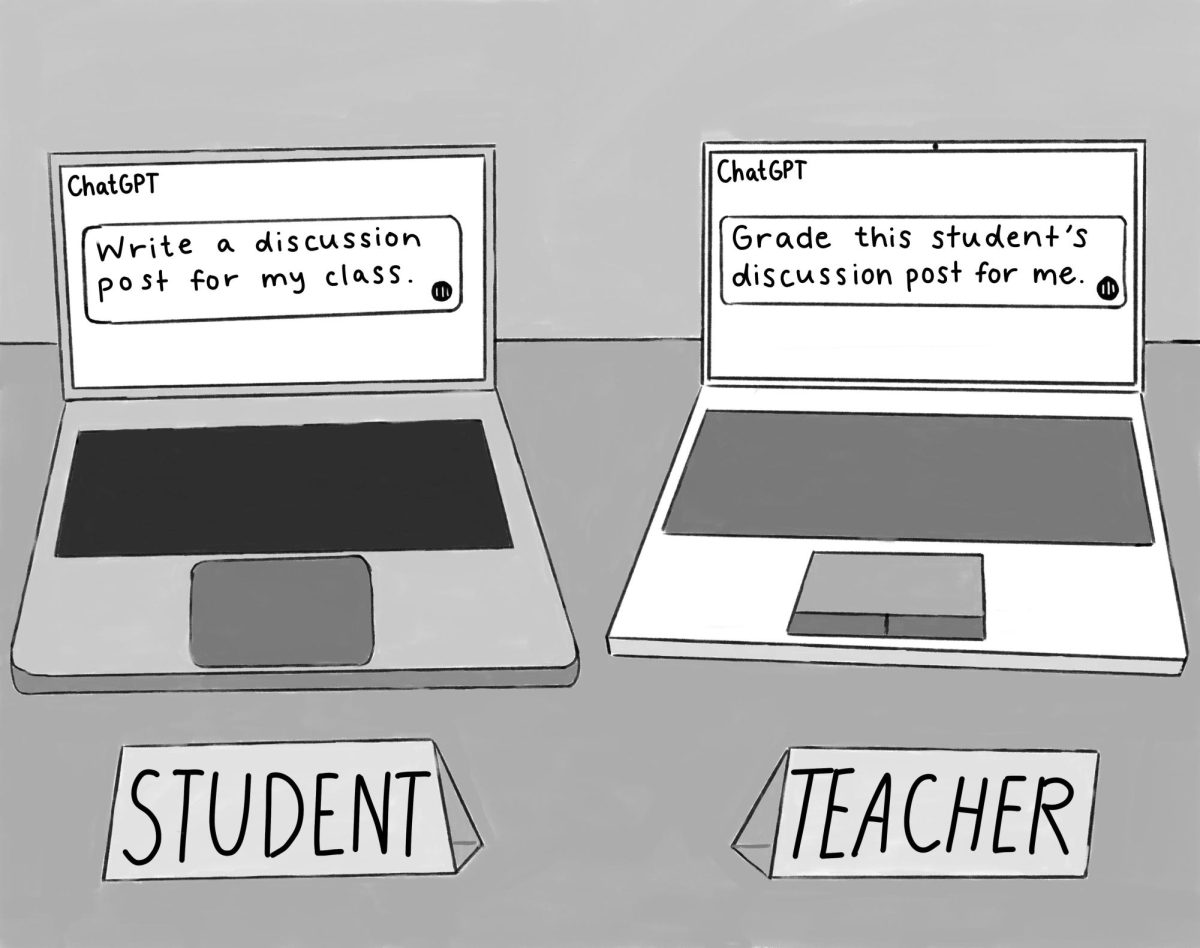
In recent years, artificial intelligence (AI) has quickly become one of the most controversial tools in education. Schools across the country have responded by setting rules for students: no AI on essays or homework, no AI assistance without citation and harsh consequences for violations. Yet, in many classrooms, there is an uncomfortable double standard. Teachers freely use AI, oftentimes without disclosure. If students are expected to meet standards regarding AI usage, teachers should be held to those standards as well.
AI can be a powerful educational tool when used responsibly and in technology like calculators and spellcheck. The problem arises when transparency and accountability are expected only from one side of the classroom. Research tells us that the use of AI undermines learning, critical thinking and academic integrity. If that is true for students, it must also be true for educators.
Students deserve to know when a teacher utilizes AI-generated materials. A discussion post prompt written by generative AI may lack nuance, originality or alignment with the specific course. These are, ironically, the same issues cited by teachers when accusing students of AI use. Holding teachers to the same standards would encourage thoughtful, intentional use rather than quiet dependence. Giving full disclosure fosters trust, which is foundational to any effective learning environment.
This issue is also fundamentally a matter of fairness. Students are required to submit original work that reflects their own thinking, often under tight deadlines and high pressure. When teachers are not required to disclose AI use, it sends a troubling message that integrity is optional: it is expected from students but not from authority figures. Faculty should be modeling the values they enforce, not contradicting them.
Furthermore, equal standards would create better conversations about ethical AI use. Instead of instilling a sense of fear in students, schools should shift toward clearer guidelines, deciding when AI is appropriate, how it should be cited and how it can support human efforts. Teachers, as the professionals, should lead by example.
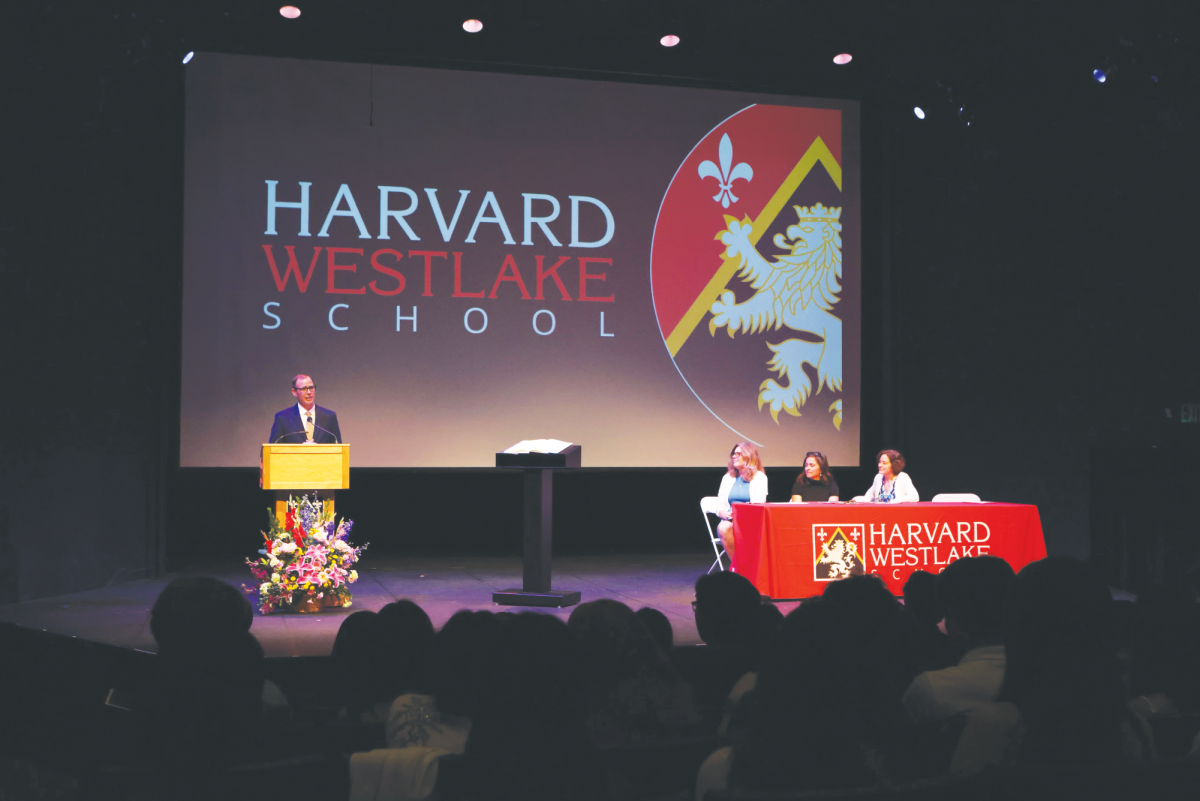
The school does not currently have specific regulations around general teacher AI usage, but rather rules tailored to each department, according to an interview with President Rick Commons. This laissez-faire approach can be concerning, especially as AI continues to grow. There is a risk that the integrity of the educational process could be compromised. By not setting clearer, more transparent regulations, the school is missing an opportunity to lead by example in creating ethical standards that can successfully balance technological innovation with academic integrity.
Education works best when expectations are mutual. If schools want students to engage honestly with their work, teachers must do the same. Applying consistent AI standards across the school helps establish practices of integrity, transparency and accountability, preparing everyone to navigate a world driven by AI.