

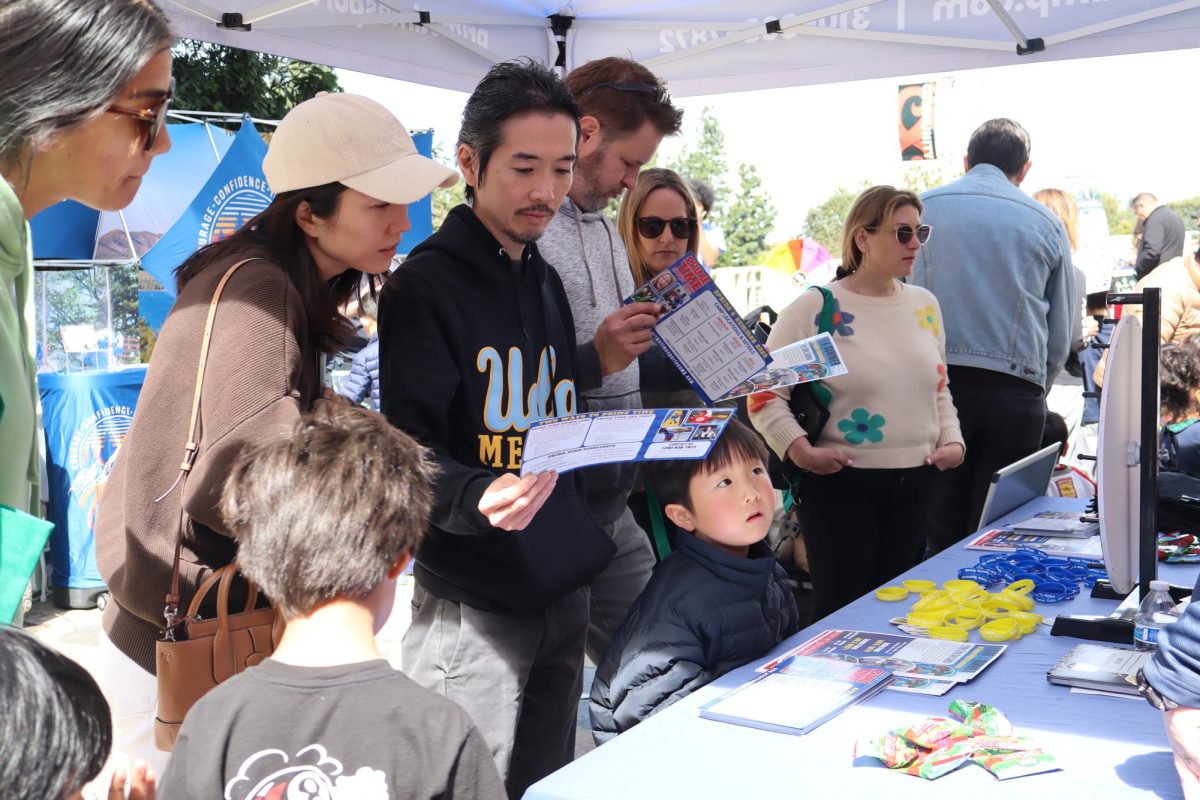




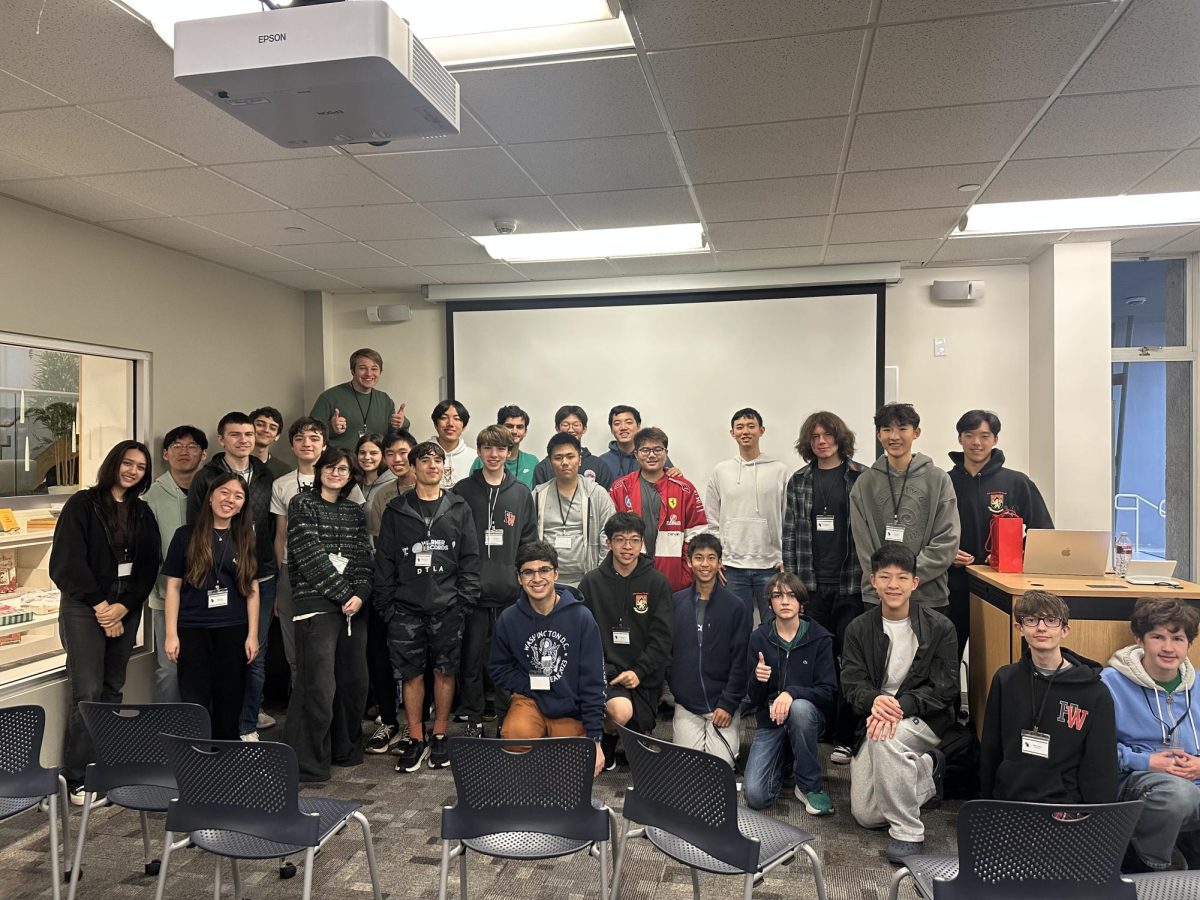
HackHW hosted its 11th annual Hackathon in Mudd Library on Feb. 16-17. Students stayed at the Upper School overnight to create a playable game in 36 hours.
HackHW leader Joshua Bie ’28 said the event was a chance for students to develop coding skills while having fun.
“[Hackathon] was a great opportunity for students who are interested in coding and making their own game,” Bie said. “A lot of people learn coding just for a class and don’t know how to use it for making a game. Hackathon was a fun event where you could make new friends while learning new skills.”
Hackathon chaperone and Math Teacher Andy Stout said the event united students across campuses .
“Hackathon brought together the computer science community in Harvard-Westlake, both across the Middle School and the Upper School,” Stout said. “The middle schoolers were able to get a preview of what’s to come when they come up here to the Upper School.”
HackHW leader Ellie Liou ’26 said the leaders aimed to provide younger participants with the same support they had received in the past.
“Many of HackHW’s current leaders attended their first Hackathons in eighth or ninth grade,” Liou said. “It was at those events that we found guidance from older HackHW leaders, encouragement from chaperoning teachers and inspiration from upperclassmen who were participating as well. We hope to pass on these experiences to encourage continued exploration of computer science and game development, as well as a new generation of HackHW leaders.”
Boyan Manolov ’28 said he found collaborating with friends to develop a game fulfilling.
“The most rewarding part of my Hackathon experience was getting to work on a game with my friends and learning what their opinions on games were and what they focused on in games,” Manolov said. “It was also great to have a cool, fun, finished game at the end.”
HackHW leader Andrew Jo ’26 said alumni working in technology and gaming industries returned to serve as judges.
“The most interesting part of preparing for Hackathon was reaching out to alumni of the school who work in various tech or gaming industries,” Jo said. “We have some people like Josh Glazer [’96] who come back nearly every year. They bring back their experiences in professional industries and then pass along to current students what they learned in college and their careers.”
Stout said he encouraged artistic students with no experience in computer science to join Hackathon.
“One nice thing about the game jam is that the games inevitably need art assets like characters and backgrounds,” Stout said. “So, I recommended that every team tries to find someone who doesn’t necessarily need to know any programming or computer stuff at all, but knows how to make art.”
Kai Nantamanasikarn ’28 said Hackathon was meaningful because it was a chance to de-stress and socialize with students who are also interested in computer science.
“It’s not often that I get to work on side projects outside of school because homework and studying are really demanding, so this time, when I can relax, is really nice,” Nantamanasikarn said. “In addition to other groups like Video Game Design Club, this was just another great place for me to interact with people who share similar interests.”