








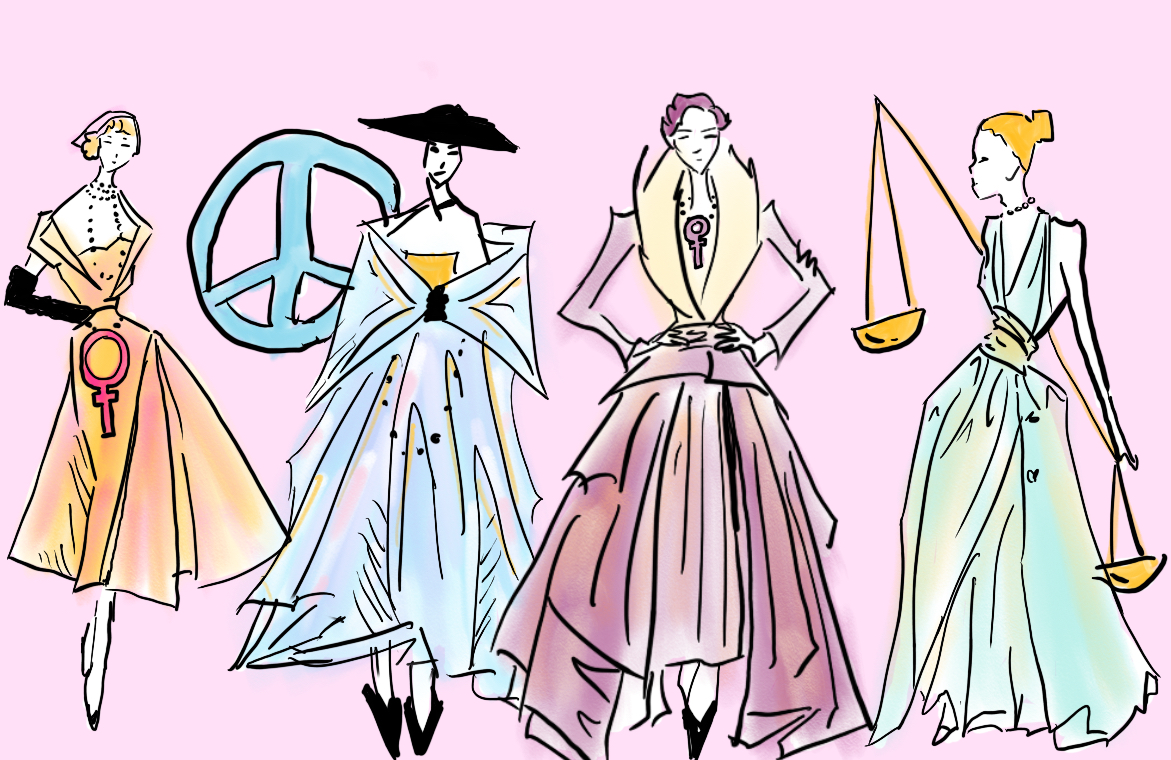
Historically, fashion has been used as a mode of social and political messaging in some of the country’s most transformational movements. During the homespun movement of the 1760s, colonists boycotted imported goods from the British and instead wore simple clothes crafted from local materials as an act of defiance. Throughout the Civil Rights movement, political parties like the Black Panthers intentionally selected their uniforms, sporting berets as a military and party symbol and afros as a rejection of assimilation.
In the 2000s and early 2010s, designers used their platforms to advocate for social justice causes. In 2013, the Vivienne Westwood flagship store in Milan displayed mannequins in their storefront covered in black and blue bruising, highlighting the importance of speaking up against domestic violence. The campaign gained major traction globally. Similarly, in the 2014 Paris Fashion Week, Chanel staged a protest on the runway, with models carrying signs reading phrases like “Boys should get pregnant too” and “Ladies first.” Pulling inspiration from the women’s movement in the 70s, Karl Lagerfeld, creative director of the brand, wanted the show to come with a message.
A study conducted by Bentley University and Gallup News in 2024 showed that only 38% of adults in the U.S. believe businesses should take stances on political issues. This is a decline of about 10% since 2022, a sentiment that has been reflected in designers’ runways and collections over the past decade. Last week’s London Fashion Week 2026 exhibited little to no mention of current political movements, compared to a decade ago when Fashion Week shows campaigned for various causes, including Black Lives Matter and environmental activism.
As a medium of art that people spend their lives in, fashion can be influential if intentional. It is unique in the manner in which it combines design with performance in a way no other art form does. In the same way, members of the entertainment industry are able to advocate for political causes. Even when involved in business matters, designers should use their platforms as opportunities to raise awareness around relevant issues. With influence as strong as theirs, designers have the capacity to instigate change through the medium of design.
