







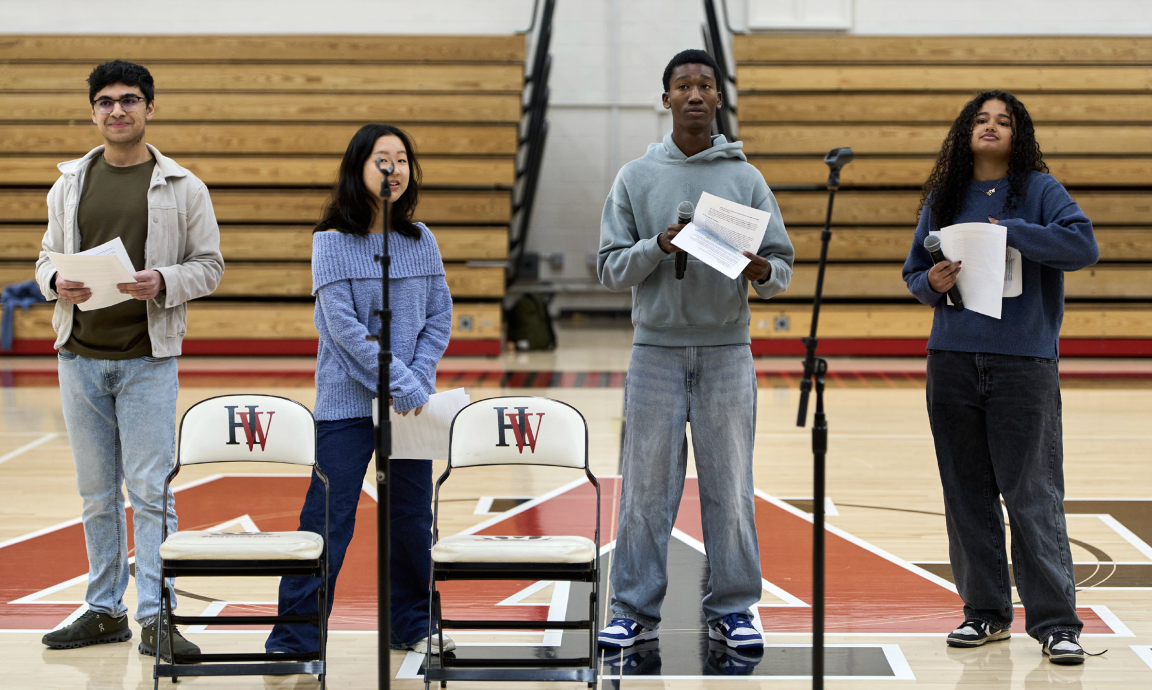
Prefect Council and Student Leaders for Inclusion, Diversity and Equity (SLIDE) co-hosted an all-student assembly on Feb. 19 to address a recent increase in cheating and Honor Board cases and announce policy changes. Students met by grade , with sophomores in Rugby Auditorium, juniors in Hamilton Gymnasium and seniors in Taper Gymnasium. Rather than teachers or faculty, members of Prefect Council and SLIDE were present in each location.
The assembly opened with announcements and new policy directives outlining how the school is responding to the recent increase in Honor Code violations. These measures include stricter testing protocols, such as limited restroom access, bans on pencil pouches, prohibitions on device use and other restrictions during assessments. This was followed by an announcement that Honor Board consequences would be more severe going forward. Prefect Council and SLIDE Chairs then opened the floor for feedback and questions.. Student reactions to the new policies were mixed.
SLIDE Co-Chair Dhara Jobrani ’26 said being surrounded bypeers who cheat normalizes academic dishonesty.
“There is a serious incentive for students to cheat when the academic pressure and competition is so high,” Jobrani said. “At a school like ours, when one student cheats and does well, it raises the bar for all the other students who then feel they need to cheat as well. It is a horrible cycle that can be countered with limiting that first student from being able to cheat in the first place.”
President Rick Commons said the school’s efforts to reinforce academic integrity are meant to uphold an even playing field in classrooms.
“We all have the goal of protecting academic integrity and making it so that what happens in the classroom begins with trust and is fair,” Commons said. “There shouldn’t be one student who has an advantage that another student doesn’t.”
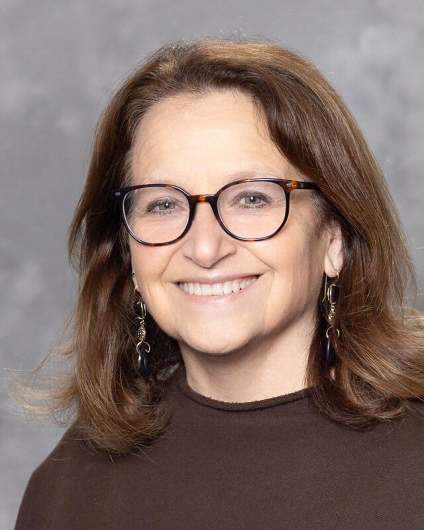
Head of Upper School Beth Slattery said an unsupervised trust-based honor system is unrealistic to effectively govern teenagers, making stricter consequences practical and necessary.
“We have to acknowledge that it’s not a reasonable expectation to have teenagers truly live in a community of honor,” Slattery said. “And so, unfortunately, I feel as though we actually have to have more significant consequences.”
Math Teacher Joshua Helston said the new policies initially made him apprehensive , but that he trusts that they have been implemented for good reason.
“My gut reaction is that the policy seems excessive, but I recognize that there must be a reason that it must have been implemented,” Helston said. “It was a shock to some of us teachers because I seem to see my class as honest. However, I understand that might not be the case for all classes, so hopefully the policies improve security for those classes.”
Slattery said students already know what constitutes cheating, so the honor code itself is not the most effective tool in guiding their behavior.
“The honor code is almost besides the point,” Slattery said. “The things that students are doing, they know are wrong. They don’t need the honor code to tell them that using AI to write your papers or having your phone in your lap or writing answers on your arm are cheating.”
Nolan* said while he has reservations about the new policies, which he believes may create a more anxious testing environment for students, he hopes they will ultimately achieve the administration’s objective of making exams more secure.
“I believe that the new testing policies will initially increase student stress,” Nolan said. “Being in a testing environment with increased security will make things more nerve-wracking. I think this view is shared by a lot of peers, which helps explain why the student assembly received mixed reception. However, I like to see the bright side of things, and I do hope that these policies accomplish their goals.”
Commons said the policy changes are protective not punitive and that by establishing clear expectations and meaningful consequences, the school provides students with guardrails to make better choices.
“To use a clumsy and familiar metaphor, if there were no speed limit on the highway, sometimes I would drive too fast,” Commons said. “And knowing that there’s a speed limit and that there is a consequence if I am caught driving too fast, it causes me to be safer. It’s important for us to do things that encourage students to make the choice that I believe most students want to make. I don’t believe that students start out the day saying, ‘I’m going to cheat today.’ It is the responsibility of the school to put things in place that help students to make good decisions.”
Jonah Gaetz ’27 said he encourages student representatives to pivot away from consistently advertising leniency, arguing that doing so erodes the purpose of the Honor Board.
“If the point of student representatives on the Honor Board is to get students out of trouble, then why do we have this institution at all?” Gaetz said. “If there’s going to be an institution where students can have a say in how punishments are divvied out for cheaters, then they have to be pursuing it with something resembling fairness. You can’t always give out the nicest punishment.”