







It is the week of Chandler School’s sixth-grade retreat to Big Bear. In front of the lodge dining hall, Parker Plurad ’27 and his friend are playing a game of catch before breakfast. When the friend throws with a twinge more force than usual, Plurad naturally matches the enthusiasm on his return toss. The ball strays from its standard course, knocking the friend’s head instead. Disregarding Plurad’s immediate apology, the friend screams at him. “This is why you are adopted!”
Plurad said the moment deeply upset him because of the complicated feelings he harbored about being put up for adoption at seven months old.
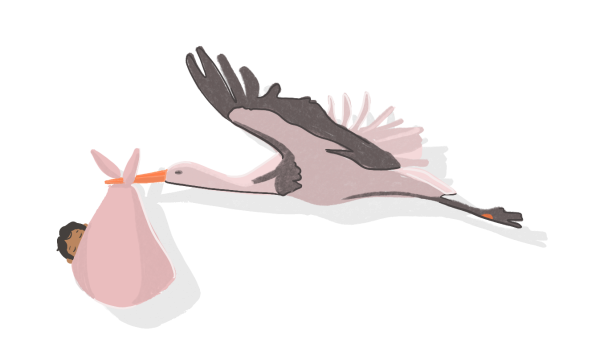
“I just stood outside the breakfast hall crying,” Plurad said. “My biological mom was 17 years old when she gave birth to me in South Korea, and my father left us immediately after I was born. My mom tried to raise my older sister and me, but she just couldn’t do it. She gave us up for adoption and, even though I was so young, the experience traumatized me. My [adoptive] mom tells me I used to crawl away from her as if I was trying to run away. When I first met my adoptive parents, I apparently bit them because I was so scared. Now, though, I am at peace with my past, and I’ve developed a deeper understanding of the circumstances of my adoption.”
Plurad is one of several students who were adopted from a foreign country as a baby. The number of international adoptions in the United States reached a high in 2004 with 22,988 cases, but has since declined by 94% to 1,275 cases in 2023, according to the Pew Research Center.
Tess Latham ’27, who was adopted from Ethiopia in 2009, said she has encountered questions about her unique past, but her adoptive family’s constant support has made her feel secure.
“A few times, I’ve told my friends that I’m adopted and I’ve gotten weird responses like ‘Oh, are you really sad about that?’ or ‘Does your family love you?’” Latham said. “I could have internalized those ideas and begun to wonder whether I was out of place in my own family. Instead, my family always talked openly about my adoption, so that never became an issue.”
To fully piece together their personal identities, many adopted students learn about the ethnicities of their birth country, research their biological parents or explore their sibling relationships, according to the National Council for Adoption.
Transracial adoption has been prevalent in the United States for decades, specifically with the American adoption of Korean children in the 1950s and Vietnamese children in the 1970s, according to the University of Nevada, Reno. Between 1999 and 2016, 78,257 children were adopted from China by American parents because of the country’s one-child policy implemented to curb population growth, according to The Center for Public Integrity.
Latham’s parents are both white, but they strive to help Latham connect with her Ethiopian and Black heritage. Latham’s family often visited Little Ethiopia when she was younger. Latham and her mother are also currently members of Jack and Jill of America, a national organization dedicated to supporting young Black leaders. Latham said her parents wanted to make sure she was confident in her racial identity.
“My family didn’t want to adopt me, move me here and forget where I came from,” Latham said. “They wanted to make sure I never felt any type of self-hate. It was important I never thought I needed to change the way I acted or did my hair based on what other people were saying about me.”
Brynn* ’26, who also has two white parents, was adopted from Vietnam. Brynn said her parents did not foster a connection to her Vietnamese heritage.
“My parents weren’t trying to separate me from my culture, but it wasn’t on their minds,” Brynn said. “I remember asking them if we could visit Vietnam when I was younger, and my mom said we could go when I was 18 years old. If I had more Vietnamese culture in my life growing up, maybe I would be a different person than I am now.”
Latham said she would not have known how to connect with her Black identity if her parents had not supported her.
“If my parents hadn’t celebrated my Black culture when I was younger, I would have been a lot more uncomfortable embracing it now,” Latham said. “I wouldn’t have been able to sit here and have this conversation. I would have wondered why I had any right to discuss something that I had abandoned.”
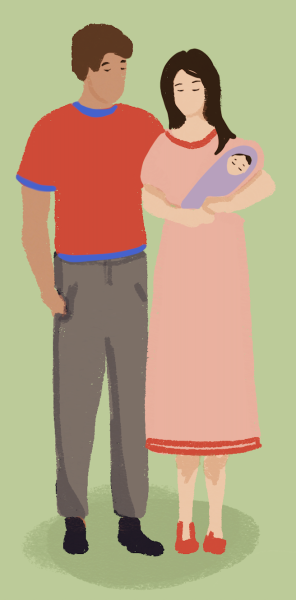
Adopted children often want to meet their birth parents because they are curious about traits they inherited or why they were put up for adoption, according to UConn Health. Licensed Clinical Social Worker Rachel Pompas said understanding how certain genetic traits manifest in themselves is often central to an adopted person’s identity.
“Adoptees need to fill in the gaps in their story,” Pompas said. “When they get older, they start to ask, ‘Why do I look the way I do?’ ‘Why do I have certain personality characteristics?’ and ‘Why am I good at art but not good at sports?’ or vice versa. Meeting their birth parents helps adoptees develop how they see themselves and how they carry themselves through life.”
Latham’s family hired a professional in Ethiopia to research her biological parents, and he located Latham’s birth mother along with several of her biological cousins. Though Latham can now contact and form a relationship with her birth family, she has chosen to delay the reunion. Latham said connecting with the country of Ethiopia is more important to her than seeing her biological relatives.
“To me, seeing Ethiopian culture feels more relevant than meeting my biological family,” Latham said. “If I visit, I’d rather spend time exploring, eating food and talking to people. This sounds cold, but my biological family are complete strangers, and I don’t feel connected to them.”
Plurad said his interest in meeting his biological parents has grown over time because he is now able to understand why he was put up for adoption.
“The older I get, the more I want to meet my birth parents so I can see who they grew into and they can see who I grew into,” Plurad said. “When I was younger, I wasn’t fully conscious of why they gave me up, and I used to think they had abandoned me. Now, I understand that my biological mom was 17 years old and had no money, two kids and no husband or child support. Putting us up for adoption was probably the best decision she could’ve made, and I fully support her in hindsight. I mostly want to meet her to say thank you for the life she let me live.”
Pompas said that though it is important to meet biological parents, adoptees must be ready to accept the unexpected details they could learn.
“Sometimes, adoptees find out their parents didn’t always make the best choices,” Pompas said. “The experience could trigger a lot of unprocessed emotions, so adoptees have to make sure it’s the right time in their lives to handle the new information. That can be when they are 10 years old, 15, 20 or even 40.”
Plurad said it would be difficult to discover that his mother did not put him up for adoption with his best interest at heart.
“If I learned my biological mom just abandoned me and dropped me on a doorstep, that would affect me drastically,” Plurad said. “There’s a difference between your biological mom saying ‘I want to take care of you, but I just don’t have the money’ and her wanting to get rid of you because she had sex for fun and had kids for fun. It would be devastating to hear that someone just didn’t want you.”
Beyond considering connections with their birth parents, many adopted students are currently navigating relationships with their siblings, both biological and adoptive.
While Brynn was adopted from Vietnam, her older sister was adopted from China. Brynn said they do not have a close sibling connection.
“My sister and I always had a rocky relationship,” Brynn said. “She is four years older than me, and it was always hard for us to bond because of our different stages in life. When she is in Los Angeles, she goes to Chinatown often, and I’ve been trying to explore my Vietnamese culture more, but our disconnect is not necessarily because we are both adopted and we don’t share a common heritage.”
Latham has an adoptive brother who is ten years older and who is her parents’ biological son. Latham said her brother welcomed her into the family.
“My parents brought me home, and Max was my brother straight away,” Latham said. “I’ve never thought of him as anything but my brother, and there was never any doubt on his part. Everybody in my family was so open to my adoption and immediately ready to accept me.”
Though Plurad does not have any adoptive siblings, his biological half-sister lives with her adoptive family in San Diego. The two families planned meetings for the half-siblings when they were younger, but Plurad said he and his sister have recently fallen out of touch.
“I don’t even remember the last time I texted my sister, which is pretty concerning,” Plurad said. “I don’t know if I could make a trip all the way down to San Diego to see her, but I think we should get past the bare minimum of talking to each other. We already have a special connection because we are related, and it’s important for us to be there to support each other if we need it.”
Plurad said he would have appreciated spending his childhood with his half-sister.
“I wish I had stayed in the same family as my sister,” Plurad said. “I’ve grown up as an only child, and I’ve never gotten to experience having an actual sibling in the house. Sometimes when I’m scrolling online, I’ll see videos of two brothers or sisters with a dog. They get along, entertain each other and look like they’re having the best time together. I would have enjoyed having an older sibling there to play with when I was younger and to advise me now.”
Before Plurad was adopted, his parents attempted to have a biological child, but the baby did not survive. With a 25% chance the same result would happen again, his parents decided to pursue adoption. Plurad said his family celebrates his ‘adoption day,’ which takes place on April 20 each year.
“We always go out for dinner, and my aunts and uncles send me texts saying ‘happy adoption day,’” Plurad said. “My parents usually get me a little present. Sometimes, it’s a framed picture of me as a baby or a replica of a stuffed animal I played with when I was younger.”
Latham, whose parents chose to adopt a child after seeing their friends pursue adoption, said she is grateful for her family and the opportunities she currently has.
“Sometimes, it’s frightening to think about what would have happened if I hadn’t been adopted,” Latham said. “Knowing how much I love my parents and everything my parents have allowed me to achieve, I am so thankful for the life I live.”
*Name has been changed.
