






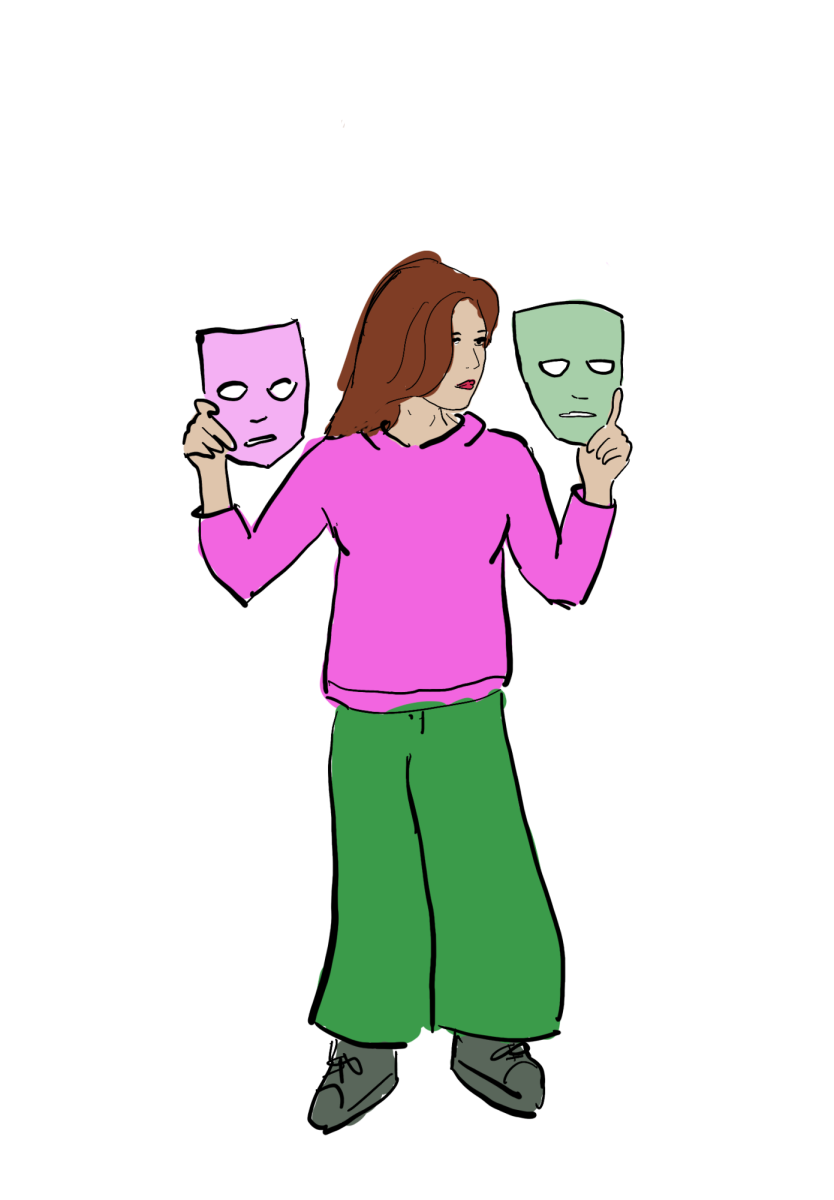
It is spring at the Upper School, and Barron Linnekens ’26 has just handed in a written assignment in his history class. Straying from his personal opinions, Linnekens said he chose to write from a political perspective differing from his own in the interest of academic scores.
“I took a history class with a very liberal teacher who I felt wouldn’t tolerate any other viewpoints,” Linnekens said. “That class was one where I didn’t believe anything I wrote. In that class, you’re taught what you should write about in lectures, so I was always writing what I thought he wanted to hear. It was effective, and I ended the year with the grade I wanted.”
Linnekens is among several students refraining from sharing their political views in classes with teachers who hold different opinions. Individuals are far less likely to share political beliefs in professional or academic environments due to concerns that it might affect their success, according to a study conducted by the Pew Research Center. Barbara* said she worried her pro-Palestine views might have affected her academic performance in a history class.
“My views weren’t super explicit [in class],” Barbara said. “I wasn’t raising my hand to share my opinion for every discussion and article, but when it came to things like humanitarian crises or instances when it was very obvious that we were only being shown one side of the story, or one side of the argument was definitely framed to be a lot stronger than the other side of the argument, I would definitely express my beliefs, including on written assignments. There were definitely times where I worried about what truthfully writing my views on assignments or tests could result in.”
Jonah Greenfeld ’27 said he avoids sharing his opinions as they pertain to the Middle East in specific academic environments for various reasons.
“I don’t feel comfortable expressing my beliefs in being pro-Israel for two reasons,” Greenfeld said. “Mainly because it is such an over-politicized issue, and it is important to understand the human experiences on both the Israeli and the Palestinian side. I also don’t share this opinion because expressing such political views will often get one labeled as being very right- wing, which I’m just not. By association in supporting Israel, people think I support Trump as well, which couldn’t be further from the truth. Additionally, in a certain academic extracurricular activity I participate in, I will never talk about being Jewish or talk about Israel in a positive light whatsoever because it feels like such an anti-Jewish environment.”
47% of young people avoid sharing political views in academic environments out of concern for backlash from peers, according to a study conducted by Harvard’s Institute of Politics. Khadija Alsharif ’27 said she feels conflicted between her connection to her identity and her opinions when considering speaking about her worldviews.
“As I’ve grown throughout my time at the school, I find trouble with balance,” Alsharif said. “I’m so proud of being Arab, especially Palestinian, but it’s hard to balance that with wanting to be mindful of other people. I’m very cognizant of the fact that not everybody is either aware of what’s going on in the region [of the Middle East] or super on board with what I’m on board with. I try to be mindful when starting those conversations with others. I have a strong sense of self and I don’t mind telling people that I’m Palestinian or Jordanian but, at the same time, I am wary of never wanting others to be uncomfortable talking to me. I wear my heart on my sleeve, especially with where I’m from. I always want to lead with that, but it’s not for everyone.”
Kenzie Lane ’27 said the majority of students in her classes openly share their views, herself included, with many identifying with the same American political party.
“In our history class, when we talk about current politics, we’re all very comfortable sharing our views,” Lane said. “I don’t know if there are people who are secretly conservative or liberal, but saying the opposite, but from what I’ve seen, my classmates don’t mind sharing political stances. If we don’t have one, we’re also comfortable stating ‘I don’t know enough to say’ or ‘I’m in the middle.’ That said, most of my classmates are definitely left-leaning. I would say we have a lot more Democratic students at Harvard-Westlake. I feel like there is additionally a lot of pushback against being conservative. I’m not conservative so I don’t feel this personally, but it definitely exists, especially in Los Angeles, a very, very blue city.”
Barbara said she decided to drop a class to avoid added conflict over beliefs.
“The course is already difficult, and honestly, I knew it would feel harder if I was constantly arguing for something that I didn’t believe in, with the facts that I knew,” Barbara said. “History is my strongest class and has been for years, and so to be in that class where I felt like, because of my perspective, I could be negatively impacted was definitely a disappointing experience.
Alsharif said the faculty has been supportive in times of distress, regardless of personal belief.
“The last five years have been incredibly impactful for the Middle East, and sometimes I need a bit of grace from teachers and friends,” Alsharif said. “In the past, I’ve shared what is going on in my personal situation, and have never asked anyone to be super educated or on my side about anything. Instead, I just ask for kindness in conversation. When I am in positions where I need to ask teachers for extensions, I never need to know where you stand or how you feel about the issue. My goal is just to make sure you’re aware of my personal conditions. My teachers have generally been understanding and receptive to what I’ve told them, and are usually very supportive.”
Jaelyn*, a longtime supporter of American right-wing political activist Charlie Kirk, said she noticed the emotional impact staying politically silent had on her after hearing classmates react to his death.
“I was a huge fan of Charlie Kirk’s,” Jaelyn said. “I really believed in his ideas of freedom of speech and debating. I really want to hear different and diverse opinions, and my views have changed a lot in the sense that I’ve learned about different political beliefs. I really liked him, and he was my role model. When he was killed, a lot of the language behind it, especially with classmates, was very insensitive. It was kind of like, ‘Good riddance, he’s dead.’ That’s when I felt like a bias made me feel like I couldn’t come out and say ‘I really liked him’ or ‘No, he’s actually an important person to me and I’m really truly sad that he’s dead.’”
Linnekens said he felt sharing right-leaning beliefs during the 2024 presidential elections negatively impacted him socially in particular.
“The day after Trump won the election, I came to school and was completely ignored by everybody,” Linnekens said. “ Later that week, I was in the locker room and got a call from one of my friends who warned me to stay hidden, and that there were people who wanted to hurt me. I got yelled at by students in front of teachers who did nothing, and I’ve been called every name in the book. I’ve stopped sharing my political views because of classmates.”
Alternatively, Noah Shallman ’27 said his history classes have always been a welcoming space to share a range of political beliefs, regardless of differences or conflicting ideas.
“I feel very comfortable expressing my beliefs in the classroom, and I don’t in any way feel censured by my peers or uncomfortable when participating in a class discussion,” Shallman said. “In my [Honors United States History Class] class, we regularly engage in discussions on politics at the beginning of class. People express all kinds of views and that makes me more comfortable expressing my own.”
Alsharif said her peers remind her of the importance of community.
“My friends are incredibly empathetic and continue to educate themselves about the topic,” Alsharif said. “A big part of Harvard-Westlake is finding the people you want to surround yourself with that are going to make you feel comfortable in your experience.”
