







Upper School History Teacher Erik Wade sat cross‑legged as a child in front of the TV, eyes wide when a new episode of “G.I. Joe” began. He was excited when Roadblock, a black character, stepped into frame. But, as Roadblock spoke, rhyming every line while the other characters talked normally, Wade’s excitement faded. Roadblock remained on the sidelines, eventually fading into the background. Wade said he has noticed token characters since childhood.
“That [rhyming] was the only way that suburban white kids could absorb a black person speaking to them,” Wade said.“They weren’t talking. They were only there to entertain. I realized later on that Roadblock was a classic token character, and that’s why he always felt strange to me.”
Tokenism refers to the practice of making only a perfunctory or symbolic effort to recruit a small number of people from underrepresented groups in order to give the appearance of sexual or racial equality within a group or workforce, according to the Oxford Dictionary. Token characters tend to reinforce stereotypes or reduce complex identities to a single trait or role, undermining genuine representation and limiting how marginalized communities are portrayed in media, according to Diversity.com. While token characters can provide visibility, their lack of agency or narrative significance often undermines authentic storytelling and fails to reflect the breadth of experiences within marginalized communities, according to the National Institute of Health. The term tokenism gained popularity around the 1970s and 1980s, according to Oxford Languages. The use of the term emerged after diversity efforts increased following the civil rights movements of the 1960s.
Gender Sexuality Awareness Club Leader Hudson Phillips ’27 said tokenism often continues stereotypes and results in characters without unique storylines.
“A token character is someone who is added with their primary role being to represent diversity in a novel or movie,” Philips said. “Usually, their entire character is centered around their identity, with little to no depth, and sometimes even as the butt of a joke. They are the gay or black friend.”
Wade said tokenism in media often stems from both ignorance by creators and a lack of initiative in Hollywood.
“Writers take a narrow view on certain individuals within our communities because it’s all they know or they haven’t done the proper research,” Wade said. “Even if it’s a person who’s from those communities, sometimes they’ll kind of feed into it because, in the entertainment industry, that’s what they think will sell. Sometimes, it’s really just lazy writing.”
Philips said while tokenism is not acceptable as representation in the modern age, it was once a first step towards a more inclusive future.
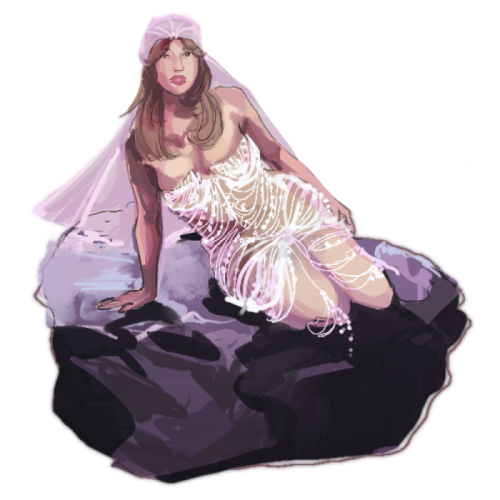
“While there is harmful representation that does come from token characters, any representation can be good,” Philips said. “Nowadays, token characters are primarily harmful. However, sometimes that was the only representation a show would contain. For example, in the 70s, a character design of Ursula from ‘The Little Mermaid’ being based on a drag queen was the most representation a queer kid would get at the time. They deserve more, but if they’re not going to get more, then token characters were a step up from nothing. We should definitely be doing much more now and going forward.”
Joseph Villa ’27 said sometimes token character can give some recognition to their community.
“Sometimes they’re helpful as they do give pride to people in that community that they’re being represented but they’re not helpful if they’re like the stereotypical ones,” Villa said. “They can feel good in the moment, but long term they still do a lot of damage, even if we don’t realize it as kids.”
Tokenism often reinforces past stereotypes to stay within the comfort zones of prejudiced and outdated ideologies. These stereotypes are continued when they are adopted by large production studios like Disney, according to the BBC. Disney has attempted to make their brand more inclusive by recasting old films to portray more diversity, like in “Peter Pan and Wendy,” in which Tinker Bell was recast with an African American actress. Yamile Maxile‑Gomez ’27 said recent attempts at diversity by the entertainment industry feel forced and fail to portray the characters in an empowering manner.
“Token characters feel so forced,” Maxile‑Gomez said. “So many new shows or movies change things in the original story to increase diversity for reviews or almost just to check it off, but it does not add anything to the story.”
Wade said when studios use token characters in their stories, it harms the group they are trying to represent by continuing stereotypes.
“Every character deserves to be three-dimensional, whether they’re in a film, TV show or book,” Wade said. “Otherwise, the diverse characters seem flat. They just play into a certain expectation about an ethnic group or any other community. It just perpetuates stereotypes like ‘this is how girls act,’ or ‘this is how nerds act.’”
Maxile‑Gomez said representation should not simply be for surface-level inclusion, but for genuine storytelling.
“Diversity has to be done with intent,” Maxile‑Gomez said. “The story needs to match with the character. They need to be as genuine as any other character in the story.”
Wade said tokenism can also result in lost opportunities for further story development and creativity.
“We should be surprising our audiences more as opposed to giving them what they’re expecting, which is token characters,” Wade said. “I often think about how a story would change if a marginal token character were made the center of the story’s universe. There is so much creative potential there that is left unused and underdeveloped.”
Phillips said media with genuine representation can help readers and viewers empathize across differences and can be a force for good.
“We live in such a polarized world, but if people can learn to empathize with each other and find similarities, we can start to bridge gaps between people,” Philips said. “Representation done right is incredibly powerful. Studios like Disney and other production studios should be working to create positive, complex and diverse characters.”
Wade said if writers are willing to take risks, there could be real diversity in media.
“Part of the issue is that we, as a broader audience, may not be ready for it quite yet,” Wade said. “But, I also think there needs to be brave storytellers who pull these characters from the margins and into the spotlight.”